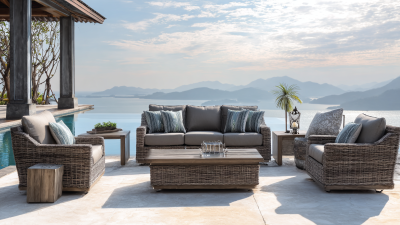

Choosing high end outdoor furniture for global buyers requires more than attractive photographs. It demands practical judgment, verified materials, and attention to local conditions. A teak dining table may perform beautifully in Sydney, yet require different maintenance in Dubai or Vancouver. Salt air, ultraviolet exposure, heavy rain, freezing temperatures, and sudden temperature changes can alter performance.
Richard Schultz, the influential American outdoor furniture designer, once said, “I wanted to design furniture that would look good in the garden and not rust.” His principle remains useful today. High end outdoor furniture should combine visual refinement with tested resistance. Buyers should examine powder-coated aluminum, marine-grade stainless steel, solution-dyed fabrics, drainage design, and replaceable cushions. They should also request technical data, care instructions, warranty terms, and independent testing where available.
Details matter. Check welds beneath the frame. Open the cushion zipper. Feel whether the fabric is dense and evenly woven. Measure doorways, balconies, and shipping crates before ordering. A premium finish means little if replacement parts cannot reach the destination.
No checklist is perfect. Even experienced buyers can overlook humidity, freight damage, or regional servicing limits. That is why reliable suppliers explain limitations instead of promising permanent performance. They should provide clear specifications, realistic lead times, and traceable production information. Global purchasing also requires careful communication across measurements, currencies, delivery terms, and installation expectations. The best choice is not always the most expensive one. It is the collection that remains comfortable, repairable, and visually convincing after years of real outdoor use.
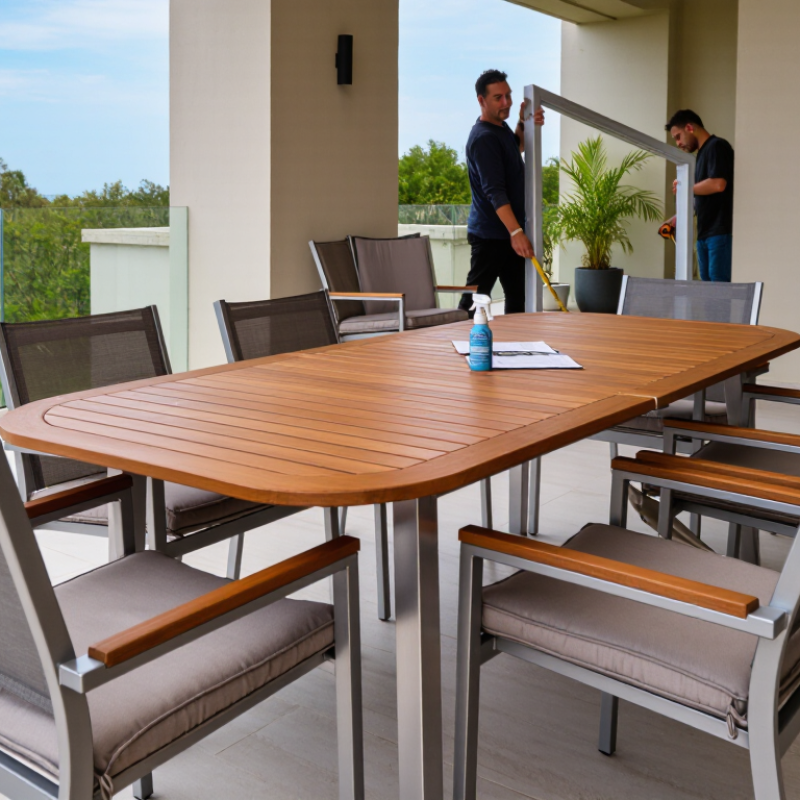
High-end outdoor furniture should be judged by measurable performance, not showroom appearance. Grand View Research estimated the global outdoor furniture market at USD 47.70 billion in 2023, with continued growth through 2030. This expansion makes quality claims harder to compare. Buyers should request material specifications, test methods, and climate limitations before placing an order.
Start with the frame. Marine-grade 316 stainless steel suits coastal environments better than ordinary steel, while properly treated aluminum reduces corrosion and handling weight. For wood, ask about moisture content, timber origin, and maintenance requirements. Fabrics should disclose UV resistance, colorfastness, water repellency, and abrasion results. ASTM D4966 is commonly used for textile abrasion testing. However, a strong laboratory result does not guarantee performance beside a sunny pool.
Details matter.
Check weld consistency, drainage holes, fastener grades, and cushion recovery after compression. Powder coatings should be tested for adhesion and weathering, not merely described as “premium.” ASTM B117 salt-spray testing can support corrosion comparisons, but it cannot reproduce every coastal climate. That limitation deserves honest discussion. IMARC Group also reports steady growth in outdoor furniture demand, increasing pressure on suppliers to document durability and responsible sourcing. Ask for test reports from independent laboratories, production inspection records, and a written warranty. In my experience, warranties often reveal more than polished product photography. Some products still fail early when ventilation, cleaning, or winter storage is ignored. Quality is partly design, and partly disciplined use.
High-end outdoor furniture should be evaluated against documented laboratory conditions rather than appearance alone. The chart summarizes measurable parameters commonly specified in international UV-aging and salt-spray test methods. These values describe test conditions, not automatic pass or fail results; buyers should also request the exposure duration, acceptance criteria, material specifications, and test reports.
References: ISO 4892-3:2016, ASTM G154, and ASTM B117.
For global buyers, weather resistance begins with the local climate, not the showroom finish. A coastal balcony needs protection from salt, while a desert terrace faces intense ultraviolet exposure and rapid temperature changes. NOAA’s UV Index guidance classifies levels of 8–10 as very high, so exposed furniture needs UV-stable coatings, solution-dyed fabrics, or naturally durable materials. Color alone proves little. Ask for test evidence.
Construction deserves equal attention. Check whether aluminum frames are properly welded, drainage holes are open, and fasteners resist corrosion. For timber, inspect moisture control, end-grain sealing, and joint movement. ISO 4892-3 evaluates plastic and coating durability under fluorescent ultraviolet light and moisture cycles. ASTM G154 also uses controlled UV and condensation exposure. These tests cannot perfectly copy every climate. Still, they reveal weak finishes early.
Fabric performance is often underestimated. A cushion may feel dense but retain water around its seams. Look for quick-drying foam, breathable barriers, and removable covers with strong stitching. The Global E-waste Monitor 2024 reports 62 million tonnes of e-waste generated in 2022, reminding buyers that premature replacement has a material cost. I prefer repairable parts and replaceable covers. My own mistake was trusting a thick powder coating without checking drainage; trapped water later caused staining beneath the frame. Ask for salt-spray results, UV test duration, warranty limits, and maintenance instructions. Vague claims are warning signs.
Choosing high-end outdoor furniture starts with the space, not the showroom.
Measure walking paths, door clearances, shade patterns, and drainage before selecting a design. A sculptural dining set may suit a spacious terrace, yet overwhelm a narrow balcony. Low-profile seating creates visual calm in compact areas. Deep lounge chairs need generous clearance for movement and cleaning.
Leave room for changing needs. Outdoor layouts rarely stay fixed.
Climate should shape every material decision.
In humid coastal regions, corrosion-resistant frames and quick-drying cushions reduce maintenance pressure. Salt air is unforgiving. In hot, dry climates, UV-stable fabrics and light-colored surfaces help limit fading and heat buildup. Freeze-thaw regions demand sealed finishes, strong joints, and protected storage during severe weather.
Heavy rain also tests cushion cores and drainage design. Ask for test data, care instructions, and replacement-part availability. A polished appearance means little if repairs are impossible overseas.
Match style to the building and landscape, but avoid copying an entire room outdoors.
Natural stone, timber tones, or textured upholstery can connect furniture with surrounding architecture. Contemporary spaces often benefit from clean lines, while traditional gardens can accept softer curves. Still, personal taste matters more than rigid style rules.
I have seen carefully matched sets feel cold because they ignored how people actually gather. Sit, reach, and imagine wet towels, sandy feet, and a sudden storm.
The best choice balances appearance, climate performance, comfort, and realistic maintenance.
Choosing high-end outdoor furniture begins with comparing suppliers, not glossy product photos. In sourcing projects, I check production experience, material knowledge, and export records. A reliable supplier should explain aluminum grades, stainless-steel treatments, wood moisture levels, and fabric performance clearly. Ask for recent project references and factory audit reports. A polished sample can still mislead.
Certifications need careful verification. Request valid test reports for UV resistance, corrosion protection, structural strength, and flame performance where required. Confirm the testing laboratory, report date, and product model. Requirements differ between markets, so one certificate rarely proves everything. I also compare warranty terms, replacement procedures, packaging tests, and response times. Slow answers often reveal future service problems. My own mistake was trusting a certificate without checking whether it covered the complete furniture set.
Customization should be practical, not decorative only. Discuss frame colors, cushion density, fabric grades, dimensions, logo placement, and stacking methods. Ask whether custom tooling requires minimum quantities. Review a physical prototype before approving mass production. Check stitching, drainage gaps, weld consistency, and carton protection under real handling conditions. Some suppliers promise unlimited options, but their development teams may lack testing capacity. A smaller, focused customization range can deliver better consistency. Keep every specification in a signed document, including color tolerances and acceptable defects. Details matter.
Global buyers should judge high-end outdoor furniture beyond its showroom price.
Grand View Research estimated the global outdoor furniture market at about USD 18.1 billion in 2023, with continued growth expected through 2030. That growth attracts more suppliers, but quality varies widely. Ask for tested load ratings, coating specifications, moisture resistance, and replacement-part availability. A low quote may hide weak finishes, difficult assembly, or expensive returns.
Logistics can change the real cost quickly. UNCTAD reports that maritime transport carries over 80% of world merchandise trade by volume. Confirm container dimensions, packaging strength, port handling fees, duties, and delivery terms before ordering. I have seen attractive furniture lose its value after one damaged shipment. Request corner protection, moisture barriers, and clear inspection photos. Also compare lead times across seasons. A promised six-week delivery may become twelve weeks during peak demand.
Tips: Build a landed-cost sheet, not a product-price list. Include freight, insurance, duties, storage, installation, and possible repairs. Select materials suited to the destination climate, such as powder-coated aluminum for humid regions or properly treated hardwood for strong sunlight. The Global Logistics Performance Index 2023 shows major differences in customs efficiency and delivery reliability between markets. That difference deserves a contingency budget. Ask for independent test reports, but do not treat paperwork as proof of perfect durability. Real performance still depends on care, shade, drainage, and daily use.
INFORMATION CENTER
RESOURCES & MORE
INSPIRATION FOR YOU
© Copyright 1981 - 2025 | California Patio™ All Rights Reserved