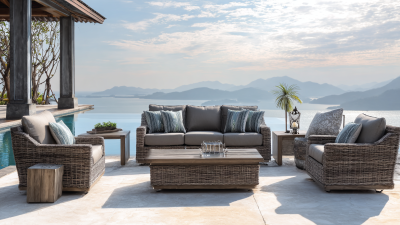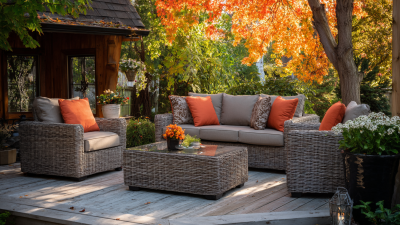

Global buyers are rethinking how people use balconies, terraces, gardens, and compact urban patios. An outdoor furniture set responds to this shift with coordinated seating, tables, and practical comfort. It can turn an empty concrete corner into a shaded breakfast area, a hotel lounge, or a family gathering space.
Industry data supports this opportunity. Grand View Research valued the global outdoor furniture market at approximately USD 47 billion in 2023. Its report forecasts continued growth through 2030, supported by residential construction, hospitality investment, and outdoor living preferences. The Business Research Company also identifies rising disposable income and home improvement spending as important market drivers. However, market estimates differ because researchers classify products and regions differently. Buyers should check each report’s methodology.
Richard Frinier, a respected outdoor-furniture designer, has described the category this way: “Outdoor living is not a trend; it is a lifestyle.” His observation helps explain why complete sets appeal to international customers. Matching materials simplify procurement. Coordinated dimensions reduce design mistakes. Replaceable cushions and weather-resistant frames support longer service.
Still, the choice is not automatic. A beautiful set may fail in coastal humidity, strong sunlight, or freezing winters. A low price can hide weak welds, poor drainage, or limited spare parts. Global buyers need more than attractive photographs. They need test data, clear material specifications, packaging details, and dependable after-sales support. That is where responsible suppliers can stand apart. Not perfectly, though. Outdoor furniture remains exposed to nature, and every specification deserves careful questioning.
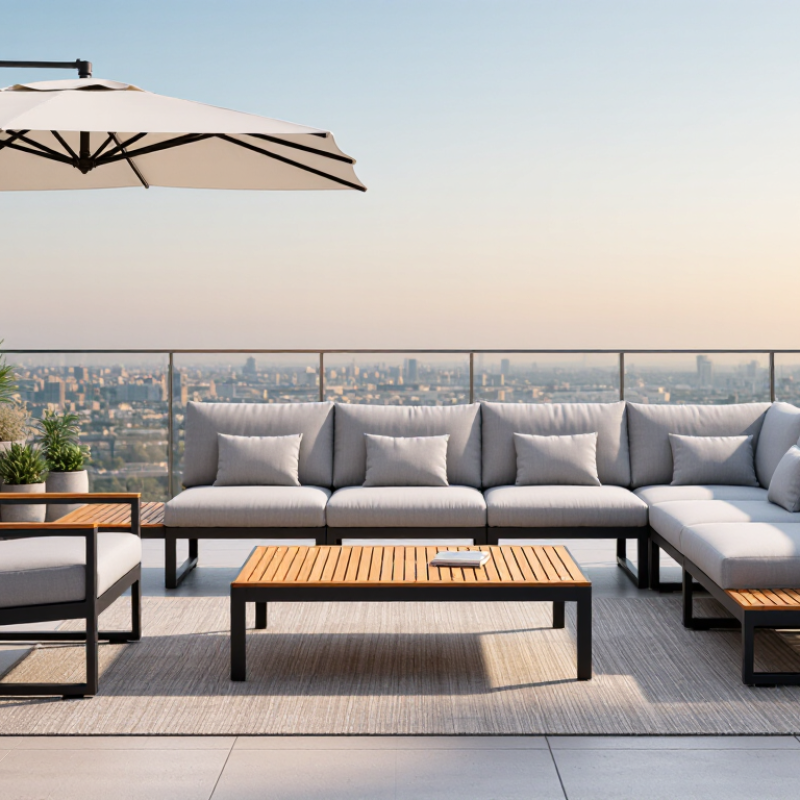
An outdoor furniture set is a coordinated group of pieces designed for open-air living. It commonly includes a table, chairs, benches, or a sofa. Some sets also contain loungers, cushions, or side tables. The pieces share a compatible size, structure, and visual style. More importantly, they should work together safely on patios, balconies, gardens, and terraces.
From practical sourcing experience, global buyers should inspect the complete set, not only one attractive chair. Aluminum frames resist rust, while treated steel usually offers stronger weight support. Teak and other dense woods can handle outdoor use, but they still need suitable maintenance. Synthetic woven materials may dry quickly after rain. Drainage matters. Cushion covers should be removable and made for regular cleaning. Measurements also deserve attention, especially for narrow balconies and small shipping containers.
A useful set balances comfort, durability, and transport efficiency. Packaging should protect corners, hardware, and finished surfaces during long-distance delivery. Buyers also need to check assembly instructions, replacement parts, load ratings, and local weather conditions. A product suitable for a dry climate may perform poorly near salt air or heavy rain. I once underestimated cushion storage space, and that mistake made daily use inconvenient. A furniture set can look complete in photographs yet feel crowded in real life. Careful checking remains necessary.
Outdoor furniture sets serve very different climates, lifestyles, and purchasing expectations. Material selection should begin with local weather conditions. Aluminum resists rust and remains lightweight for coastal balconies. However, thin frames may feel less stable in strong winds. Powder-coated finishes add color protection, but scratches still require prompt attention.
Teak and other dense hardwoods offer warmth, strength, and a natural appearance. They need regular cleaning and occasional oiling, depending on the desired color. Recycled plastic can handle moisture and requires less maintenance. It may feel heavier and less refined than wood. No material is perfect. Buyers should compare durability, repair options, weight, and long-term care before ordering.
Design also affects global usability. Stackable chairs reduce shipping volume and simplify storage in small apartments. Removable cushions help users respond to sudden rain and seasonal changes. Neutral tones, clean lines, and modular layouts usually suit varied tastes. Yet overly neutral designs can appear forgettable. Local preferences still matter, especially in color, seating height, and table size. Experienced suppliers should provide material samples, load information, care instructions, and accurate dimensions. Testing a set under real sunlight and repeated movement can reveal weaknesses that photographs hide.
Outdoor furniture sets must respond to climate, not merely decorate a patio. In procurement projects, I have seen attractive sets fail because buyers ignored humidity, drainage, or afternoon heat. Climate changes quickly. The World Meteorological Organization’s State of the Global Climate 2023 reported that global temperatures reached about 1.45°C above the pre-industrial average. That result makes UV resistance and heat-related material movement practical purchasing concerns.
Humid and rainy regions need breathable cushions, fast-draining foam, and rust-resistant hardware. Aluminum frames reduce moisture-related swelling, while properly sealed wood needs regular inspection. In coastal areas, salt air can attack weak fasteners surprisingly fast. Dry, sunny climates require stable coatings and fabrics tested for fading. The ASTM G154 standard offers a recognized method for accelerated UV exposure testing. It does not perfectly reproduce every outdoor environment, but it helps buyers compare suppliers more fairly.
Cold regions create different risks. Water trapped inside hollow frames can freeze, expand, and damage joints. Furniture sets should therefore include drainage points and frost-conscious construction. NOAA’s 1991–2020 Climate Normals provide local temperature and precipitation baselines, which help buyers select suitable specifications instead of guessing from annual averages. Details matter. One assumption deserves checking: a waterproof cover may protect cushions, yet it can also trap condensation underneath. Buyers should request test records, maintenance instructions, and climate-specific samples before placing large orders. No set is perfect.
Before purchasing an outdoor furniture set, buyers should study their local climate carefully. Strong sunlight can fade fabric and weaken some plastics. Heavy rain demands rust-resistant frames and quick-drying cushions. Coastal buyers need extra protection against salt air. I once underestimated humidity, and ordinary metal hardware began staining within months.
Measurements matter more than attractive photographs. Record the balcony, patio, doorway, and storage area. Leave enough space to walk around each chair. A large table may look comfortable but become impractical on a narrow terrace. Check the seat height, cushion thickness, weight capacity, and table stability. Very soft cushions feel pleasant at first, yet they may lose shape quickly.
Material quality deserves close attention. Powder-coated aluminum is usually lighter than steel and easier to move. Treated wood offers warmth but requires regular care. Synthetic woven materials can resist moisture, though cheap versions may crack under intense heat. Ask for clear specifications, care instructions, and test information. Do not rely only on phrases such as “all-weather.” They can be vague.
Global buyers should also confirm packaging, assembly requirements, delivery terms, and return procedures. A set that arrives damaged creates costly delays across borders. Check whether replacement parts are available locally or shipped internationally. Review warranty conditions in writing. Some sellers provide broad promises but limited practical support. I have learned to question unclear details before payment, even when the design seems perfect.
Global buyers should source outdoor furniture sets through suppliers who document material grades, load tests, and finishing processes. Ask for sample pieces before approving container quantities. A sample reveals uneven welds, sharp corners, fading, and poor drainage. It also shows whether cushions recover after repeated sitting. Keep written specifications for frame alloy, coating thickness, fabric composition, dimensions, and packaging. Vague terms create costly disputes. I have found that clear photos help, but physical inspection remains stronger evidence.
Choose materials according to climate, not catalog appearance. Coastal projects need corrosion-resistant hardware and sealed joints. Wet regions require quick-dry cushions, sloped surfaces, and mold-resistant textiles. Hot climates can expose weak coatings within one season. Request test reports, but verify their methods and dates. Independent inspections before shipment can check quantity, carton labels, assembly instructions, and damage protection. A lower unit price may hide higher replacement and service costs. Freight planning should include spare covers, screws, and replacement parts.
Maintenance instructions should be simple enough for hotel or property staff to follow. Wipe frames with mild soap, remove standing water, and store cushions before storms. Inspect fasteners every few months. Tighten them carefully. Avoid abrasive cleaners that can dull protective coatings. Buyers should ask how claims are handled, including response times and available parts. We once treated maintenance as an afterthought, causing avoidable returns. A better plan assigns an owner, records inspections, and reviews failures honestly. Not every supplier welcomes scrutiny, but reliable partners answer specific questions with evidence.
INFORMATION CENTER
RESOURCES & MORE
INSPIRATION FOR YOU
© Copyright 1981 - 2025 | California Patio™ All Rights Reserved