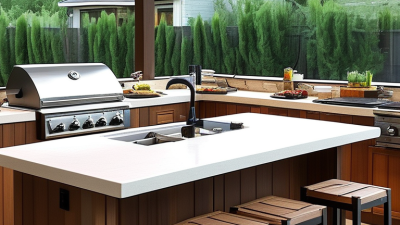
How to Choose the Best Outdoor Kitchen?
Choosing the best outdoor kitchen is not simply a matter of buying a larger grill. It is about matching the space to your cooking habits, climate, budget, and daily routines. A careful decision begins with honest questions: Do you cook quick breakfasts outside, host weekend dinners, or need a durable station for year-round use? The answers shape every choice, from counter height to storage capacity.
Russ Faulk, an outdoor kitchen expert and former president of Kalamazoo Outdoor Gourmet, has said, “An outdoor kitchen should be designed around how you cook, not how it looks.” That principle remains practical. A beautiful kitchen can still fail if the refrigerator sits too far from the prep counter. A powerful grill may also disappoint without proper ventilation, lighting, and weather protection. Small details matter.
Think about your real backyard. Imagine carrying a heavy tray across wet grass. Notice where afternoon sunlight reaches the worktop. Measure the distance between the cooking area, dining space, and indoor kitchen. These observations reveal problems that showroom displays often hide. Still, no plan is perfect. Your needs may change, and maintenance can be more demanding than expected.
This guide will examine layout, appliances, materials, safety, and long-term value. It will also challenge common assumptions about size and luxury features. The best outdoor kitchen is not necessarily the most expensive one. It is the one that works reliably, feels comfortable, and supports the way you genuinely live outdoors.
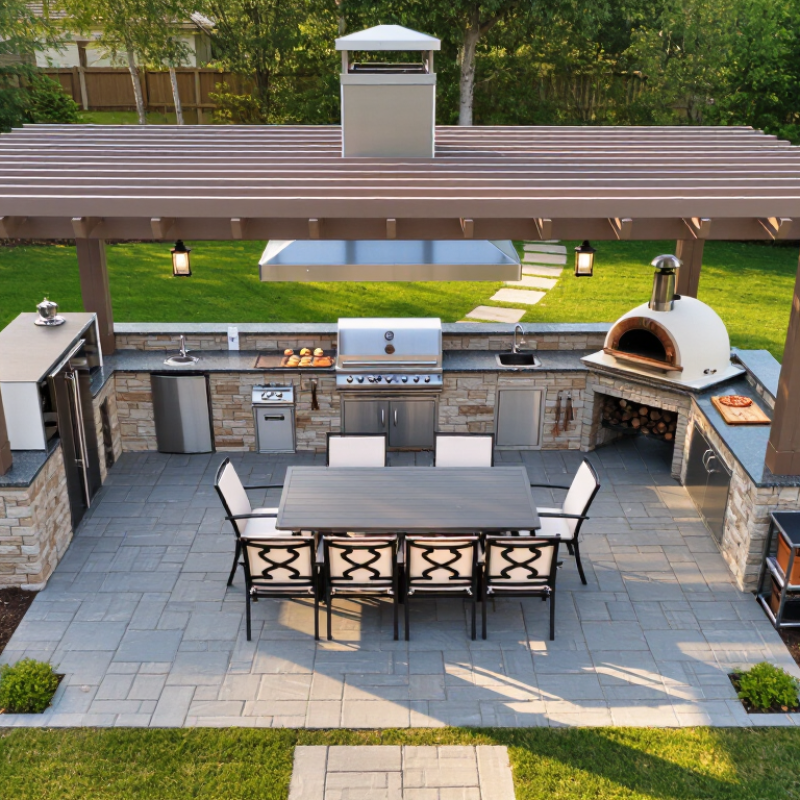
Define Your Needs: Cooking, Dining, Climate, and Guest Capacity
Choosing an outdoor kitchen starts with your real habits, not a showroom checklist. Decide whether you mostly grill, prepare full meals, or reheat food outdoors. A compact grill station may suit weekday cooking. Frequent entertainers need prep space, refrigeration, storage, and safe serving zones.
Guest capacity changes the layout quickly. The NAHB’s 2024 What Home Buyers Really Want survey found that 32% of buyers prefer an outdoor kitchen. That interest does not mean every home needs a large one. Plan roughly 60 inches of dining width per seated guest, then leave clear circulation behind chairs. Six guests can overwhelm a narrow patio. I have seen attractive kitchens become awkward because the cook blocks the only walkway.
Climate deserves equal attention. NOAA’s 1991–2020 Climate Normals provide local temperature, rainfall, wind, and snowfall averages. Use those figures before selecting cabinets, counters, drainage, or shade. A humid coastal site may need corrosion-resistant hardware and better ventilation. A cold region needs protected water lines and winter shutoff access. Hot, sunny patios require shade, because dark surfaces can become uncomfortable during service. The American Society of Landscape Architects’ 2024 Residential Landscape Architecture Trends survey continues to identify outdoor living as a major homeowner priority, but trends cannot replace site measurements. Measure twice. I still would not place the refrigerator far from the dining table. Convenience matters more than symmetry.
Map the Site: Apply NFPA 70 GFCI Rules to Outdoor Power
How to Choose the Best Outdoor Kitchen?
Map the site before selecting appliances or outlets. Mark the panel, cooking zone, sink, seating, and every outdoor receptacle. Keep power paths short and visible. NFPA 70, 2023 edition, generally requires GFCI protection for readily accessible outdoor dwelling-unit receptacles. This applies to receptacles on single-phase circuits rated 150 volts or less to ground and 50 amperes or less. Local code adoption can vary, so confirm requirements with the authority having jurisdiction.
NFPA’s Home Structure Fires report estimates that electrical distribution and lighting equipment caused an average of 32,620 home structure fires annually from 2016 to 2020. This is not an outdoor-kitchen-only figure. It still shows why protection deserves early planning. A GFCI can interrupt power when leakage reaches unsafe levels. It does not replace proper grounding, weather-resistant covers, or correct installation.
Tips: Draw the kitchen at full scale. Show doors, drains, and water spray zones. Place GFCI devices where testing remains easy. Use in-use covers outdoors. Separate lighting and appliance circuits when practical. Leave service space behind cooking equipment. I often underestimate cord movement near sinks. That mistake deserves another site check. A simple paper map may reveal it before concrete, cabinets, and wiring make changes expensive.
Build the Layout: Follow NKBA’s 12–15-Inch Landing-Space Guidance
How to Choose the Best Outdoor Kitchen?
A strong outdoor kitchen begins with movement, not appliances. The National Kitchen & Bath Association recommends 12 to 15 inches of landing space beside key work zones. This space gives plates, utensils, and hot pans a safe resting point. Without it, cooking becomes cramped and risky.
Keep it usable. A 12-inch surface beside a grill may hold a plate, but 15 inches feels more practical during busy meals.
Place landing space beside the grill, sink, refrigerator, and primary preparation area. Avoid ending a counter directly against a wall or sharp corner.
A working cook needs room to turn, place ingredients, and step away safely. Professional kitchen planning guidance also supports separating heat, water, and cold storage into clear zones.
Measure twice.Outdoor walls are rarely perfectly square, especially after stone, drainage, and weatherproof cabinets are installed.
Budget data also supports careful planning. The 2024 Cost vs. Value Report estimated that a midrange outdoor kitchen recovered about 60.6% of its cost nationally at resale. That figure is not a guarantee. It varies by climate, workmanship, and neighborhood expectations.
A common mistake is adding expensive appliances while shrinking the landing surfaces. I would rather choose fewer appliances and protect the preparation counter. The layout may look less impressive on paper, but it usually works better with wet hands, a full tray, and guests waiting nearby.
Choose Materials: 304 vs. 316 Stainless Steel’s 2–3% Molybdenum
How to Choose the Best Outdoor Kitchen?
Choose Materials: 304 vs. 316 Stainless Steel’s 2–3% Molybdenum
Outdoor kitchens face rain, salt spray, food acids, and cleaning chemicals. Type 304 stainless steel suits many inland patios. It contains chromium and nickel, but no required molybdenum range. Type 316 includes about 2–3% molybdenum, according to ASTM A240/A240M. That small addition improves resistance to chloride pitting. Salt air makes the difference visible.
The Nickel Institute explains that molybdenum strengthens stainless steel against localized corrosion. The PREN equation also assigns molybdenum a 3.3 multiplier: PREN = chromium + 3.3 molybdenum + 16 nitrogen. This is useful, but not perfect. Surface finish, weld quality, and maintenance still matter. A 316 cabinet can stain if salty residue dries on its surface. That surprises many homeowners.
Tips: Choose 316 for coastal homes, pool areas, or exposed decks. Choose 304 for covered, low-salt environments when the budget is tighter. Ask for the steel grade, not only “stainless steel.” Check welded corners and hinge areas carefully. Clean salt deposits with fresh water and a soft cloth. Avoid chlorine-heavy cleaners. I once underestimated the damage from trapped moisture beneath a cabinet base. Small design details can defeat an expensive material.
How to Choose the Best Outdoor Kitchen? 304 vs. 316 Stainless Steel
Typical chemical-composition ranges show why 316 stainless steel is often preferred for coastal or chloride-rich outdoor environments. Its 2–3% molybdenum content improves resistance to pitting and crevice corrosion, while 304 contains little or no intentional molybdenum.
Values are typical percentage ranges based on commonly specified composition limits for 304 and 316 austenitic stainless steels. Actual grades may vary by specification and product form.