What Are the Different Types of Outdoor Kitchen Appliances?
Outdoor kitchen appliances turn a patio into a working cooking space, but the right setup depends on how you plan to use it. A built-in grill may anchor the area. A side burner handles sauces, while a pizza oven brings crisp edges and smoky heat. Not every kitchen needs everything.
Outdoor-kitchen designer Russ Faulk is known for practical, use-led design. A fair paraphrase of that approach is: “Choose appliances for the way you cook, not just for the way they look.” It is a useful starting point. Think about the meals you make, how many people gather, and how much room you have. A compact refrigerator can keep drinks and ingredients close; a sink makes cleanup easier. Smokers, warming drawers, and outdoor storage can add convenience, but each needs a clear purpose.
The details matter. Measure the counter space, check appliance dimensions, and consider weather exposure before buying. Stainless steel can still show fingerprints. Wind can affect a grill’s performance. Utility access may also shape where appliances can go. These limits are easy to overlook.
This guide explores the main types of outdoor kitchen appliances and what each one does best. It also considers how cooking style, available space, and upkeep can guide your choices. More appliances do not always mean a better kitchen. Sometimes a simpler setup works better.
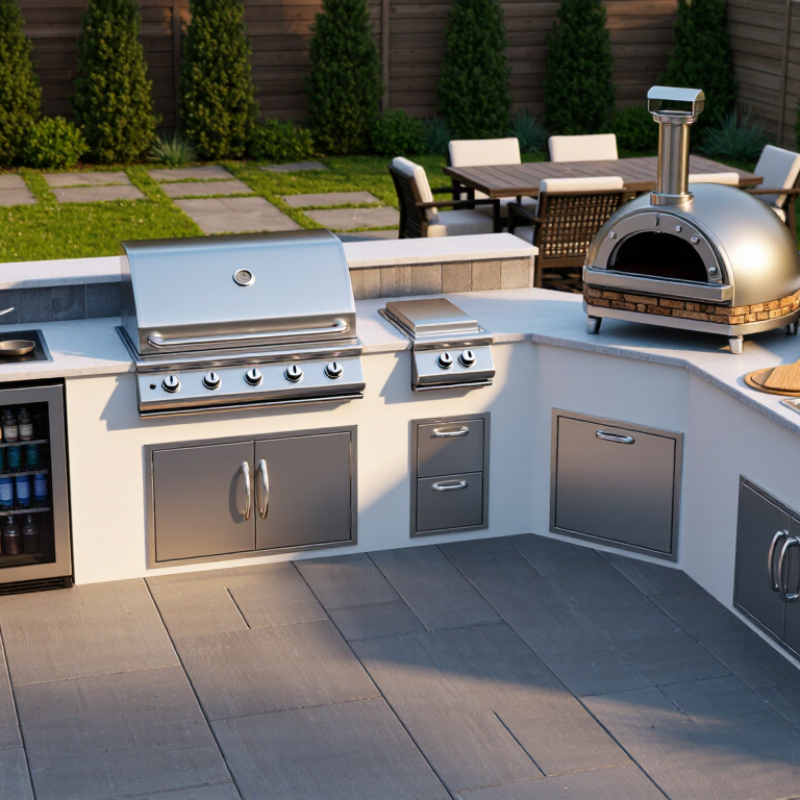
Outdoor Kitchen Cooking Appliances: Grills, Smokers, and Pizza Ovens
Outdoor cooking usually centers on three appliances: grills, smokers, and pizza ovens. A grill is the most flexible choice for weeknight meals. Its direct heat sears burgers, while a cooler zone lets thicker cuts finish without burning. Look for sturdy grates, a lid that closes evenly, and enough room to move food away from flare-ups. Heat matters. Leave clearance around the appliance, and follow its installation and ventilation instructions.
Smokers cook food slowly with low heat and wood smoke. They suit brisket, ribs, and chicken, but require steady temperature checks and more time than a grill. A built-in thermometer can help, though an independent probe gives a clearer reading inside the meat. It takes patience. Smoke should add aroma, not overwhelm the food, and ash or grease needs regular cleaning. A smoker can dominate a small outdoor kitchen, so measure its footprint before choosing a location.
Pizza ovens reach higher temperatures than most grills, helping dough develop a crisp base and blistered edges. Their cooking surfaces may be stone or another heat-retaining material; preheating evenly is key. A small peel and an infrared thermometer make launching and checking pizzas easier. Wind can cool the oven, and the first few pizzas may cook unevenly. That is part of the learning curve. Keep the oven away from low branches and combustible surfaces, and allow it to cool fully before cleaning.
Outdoor Refrigeration Appliances: Refrigerators, Freezers, and Ice Makers
Outdoor refrigerators keep drinks, sauces, and ready-to-grill ingredients close to the cooking area. Choose a model designed for outdoor conditions; indoor units may struggle with heat, humidity, and temperature swings. Check its stated operating range and required ventilation before planning a tight cabinet enclosure. A refrigerator tucked beneath a counter looks tidy, but blocked airflow can make it work harder.
Freezers are useful when outdoor meals include frozen seafood, extra meat, or ice packs. Their location matters: frequent opening in direct sun can waste energy and soften stored food. Leave space for the door to swing fully, and keep raw ingredients sealed to prevent drips onto other items. Small details matter. In practice, a freezer can become inconvenient if it sits far from the prep surface.
Ice makers need a reliable water connection, drainage, and cleaning access. Some produce ice automatically; others require manual filling, which may suit a smaller patio setup. Follow the appliance instructions for water filtration and winter shutdown, especially where temperatures can fall below freezing. Outdoor-rated equipment still needs sensible protection from rain and standing water. Before installation, confirm electrical requirements and have a qualified professional handle connections when needed.
Food Preparation Appliances: Side Burners, Sinks, and Workstation Tools
Side burners give an outdoor kitchen a separate cooking zone, so a pot of beans can simmer while food cooks on the main grill. Choose a burner with enough space for your usual cookware, not just the largest pot you own. Keep it close to the prep area, but leave room to move hot pans safely. Wind can affect flame performance, so a sheltered position helps.
A sink makes rinsing herbs, washing hands, and filling a kettle more convenient. Check that its basin is deep enough for your everyday tasks and that plumbing can be protected from freezing weather. A nearby work surface matters, too. Nobody wants to carry dripping lettuce across the patio. Keep it close. Use a durable, nonporous counter that is easy to wipe down, and avoid placing it where rainwater collects.
Workstation tools can be simple: a cutting board, utensil hooks, a small storage drawer, and a bin for scraps. Store knives securely and keep frequently used tools within reach, away from burner heat. Leave clear counter space for raw ingredients and serving dishes; a crowded surface gets frustrating quickly. One imperfect detail is easy to overlook: outdoor dust settles on clean tools. A fitted cover helps, though it can be annoying to remove every time. Check fittings, drains, and surfaces regularly for wear.
Outdoor Kitchen Food-Preparation Appliances: Typical Utility Systems
A side burner typically needs a fuel supply, while a sink needs water supply and drainage. Non-powered workstation tools, such as cutting boards and utensil holders, typically need no utility connection. Requirements vary by appliance and installation.
Ventilation and Utility Appliances: Range Hoods, Heaters, and Power Units
Outdoor range hoods need to capture smoke and grease, not just look substantial. Choose a model rated for exterior use, with a capture area that covers the cooking surface. Wind can push smoke sideways, so placement matters. Wind changes everything. NFPA’s Home Cooking Fires report found cooking equipment involved in 49% of reported U.S. home fires from 2014 to 2018. That figure covers home fires generally, not outdoor kitchens, but it supports careful grease management and safe clearances.
Outdoor heaters work best when their heat reaches seating areas without crowding combustible surfaces. Match the heater’s fuel supply to the planned layout, and follow its listed clearance and mounting instructions. A patio that feels warm on a still evening may feel chilly in a breeze. That’s easy to underestimate.
Power units should be planned around actual appliance loads, not guessed at after installation. Map outlet locations for refrigeration, lighting, and small appliances, then have a qualified electrician confirm circuit capacity and outdoor protection. Keep connections accessible, protected from weather, and away from hot cooking zones. One practical detail is often missed: leave room to open covers and reach shutoffs. Sources: NFPA, Home Cooking Fires; appliance installation instructions and applicable electrical requirements.