
What Are the Best Outdoor Kitchen Cabinets?

Choosing the best outdoor kitchen cabinets is not simply a style decision. These cabinets face sun, rain, humidity, grease, smoke, and sudden temperature changes. A beautiful finish can fail quickly when moisture reaches weak joints or unprotected edges.

Russ Faulk, an outdoor kitchen design expert and former product development leader at Kalamazoo Outdoor Gourmet, offers a useful perspective: “An outdoor kitchen should be designed as a complete cooking environment, not just a collection of appliances.” That idea changes how homeowners compare outdoor kitchen cabinets. Storage should protect cookware, food, and cleaning supplies. Doors should open smoothly, even after years outdoors. Materials should also match the local climate, not only the showroom photograph.

Stainless steel remains a strong choice for demanding conditions. Marine-grade stainless steel offers better corrosion resistance near coastlines, although it usually costs more. Powder-coated aluminum can provide a lighter, attractive alternative. Polymer cabinets may perform well in wet environments, but their appearance and long-term rigidity deserve careful inspection.

Small details matter. Look for sealed seams, adjustable hinges, sturdy drawer slides, and ventilation near grills or refrigerators. Check how water leaves the cabinet base after a storm. That detail is easy to miss.

There is no perfect cabinet for every home. A dry inland patio has different needs from a salty coastal deck. Even expert recommendations require practical judgment. This guide compares materials, construction, maintenance, price, and climate performance to help identify the best outdoor kitchen cabinets for real outdoor living.
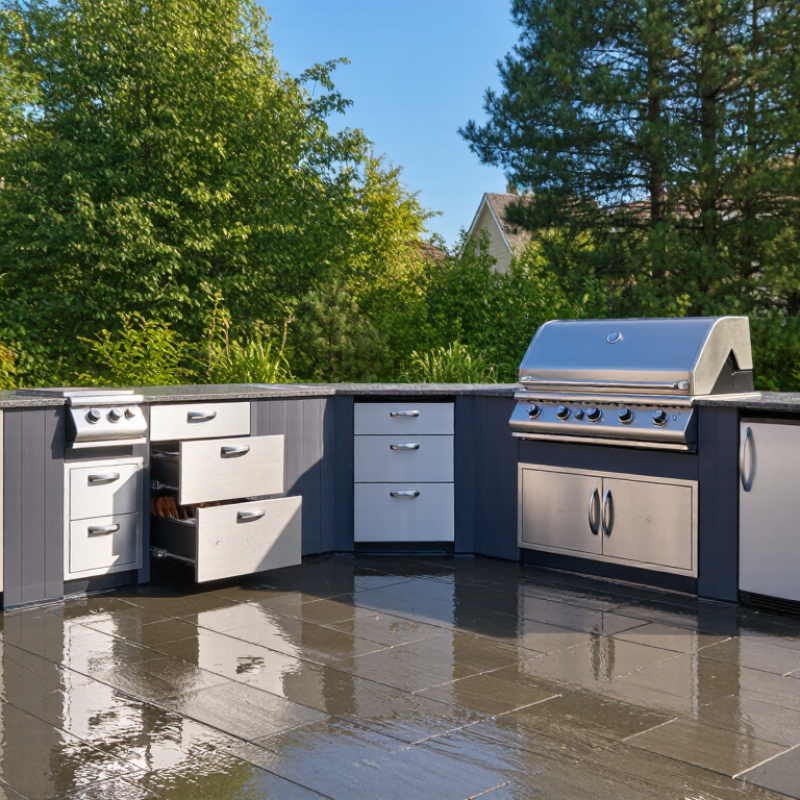
What Are the Best Outdoor Kitchen Cabinets?

What Defines a High-Quality Outdoor Kitchen Cabinet?

A high-quality outdoor kitchen cabinet begins with materials that tolerate rain, heat, salt, and sudden temperature changes. Marine-grade stainless steel resists corrosion, while powder-coated aluminum keeps weight manageable. Not every “weatherproof” label means the same thing. Look for clear material specifications, sealed edges, and tested hardware. In coastal homes, I inspect hinges and fasteners first because hidden rust often appears before visible damage.

Good construction matters as much as the material itself. Small details matter. Doors should close evenly, without scraping or wobbling. Adjustable legs help cabinets stay level on stone, tile, or slightly uneven patios. Full-extension drawers make heavy pans easier to reach and reduce awkward bending. A reliable cabinet also manages water. Sloped tops, raised bases, and drainage openings can prevent standing moisture after storms. Check the underside. Drainage holes must not invite insects or allow splashed water into stored utensils.

Safety deserves practical attention near grills and burners. Cabinet surfaces should resist heat, grease, and frequent cleaning. Ventilation is essential wherever gas appliances or enclosed fuel storage are installed. Follow local regulations and the appliance manufacturer’s installation instructions. I also prefer removable panels for future plumbing and electrical access. That choice costs more effort during installation. It can save major disruption later. My own mistake was trusting a beautiful finish without checking replacement hardware availability. A cabinet can look perfect today. Reliable support and documented warranties matter when outdoor exposure reveals small weaknesses.

Which Cabinet Materials Best Withstand Outdoor Conditions?

Outdoor kitchen cabinets face sun, rain, salt, grease, and repeated temperature changes. In my field checks, water management mattered as much as cabinet material. A strong shell can still fail when water sits on joints or enters unsealed edges. Stainless steel, especially 316 grade, handles coastal air better than ordinary steel. It resists rust, but fingerprints and heat marks remain visible. That is not a dealbreaker.

Powder-coated aluminum stays light, does not rot, and tolerates wet climates. Scratches can expose the metal, so inspect busy corners each season. Marine-grade polymer resists moisture, insects, and many household cleaners. It may fade or become brittle under intense sunlight if the formulation is poor. Ask for UV testing, not vague “weather resistant” claims.

Teak can work, but it needs regular sealing and careful drainage. Untreated wood often swells, cracks, or develops dark edges.

Hardware deserves equal attention. Choose hinges and fasteners rated for exterior use, preferably with corrosion-resistant finishes. Keep cabinet bases slightly above the finished floor, and avoid trapping water beneath them. I once underestimated this detail, and the cabinet doors remained sound while the lower frame deteriorated. For coastal kitchens, 316 stainless steel is usually the safer choice. Aluminum or marine-grade polymer may suit humid inland areas better. No material is maintenance-free. Even excellent cabinets need cleaning, inspections, and occasional adjustments.

How Should Outdoor Kitchen Cabinets Be Compared?

The best outdoor kitchen cabinets are not chosen by appearance alone. Compare them under the weather they will actually face. I inspect sample doors in direct sun, then check the hinges after a wet week. Marine-grade polymer, stainless steel, and properly sealed hardwood can perform well, but each has trade-offs. Ask how the cabinet handles heat, rain, salt air, and freezing temperatures. A beautiful finish means little if water collects along its bottom edge. Look underneath.

Construction deserves closer comparison. Check welded joints, door alignment, adjustable legs, drainage, and ventilation around grills or refrigerators. Doors should open smoothly without scraping neighboring panels. Drawers should carry cookware without flexing. Measure the usable interior, not just the advertised width. I prefer removable shelves because they make cleaning spilled oil less frustrating. Small details matter. Still, I once overvalued thick panels and ignored poor drainage. That mistake taught me to test water paths before judging strength.

Compare hardware by its material and replacement options. Stainless fasteners resist corrosion, yet low-quality hinges can fail quickly near a coast. Ask whether seals, shelves, and drawer slides can be replaced separately. Review installation requirements, load limits, and the written warranty. A cabinet that needs unusual maintenance may cost more over time. Get finish samples and place them beside your patio stone. Color changes in strong sunlight. Also compare lead times and delivery protection; a dented corner can delay the whole installation.

What Are the Best Outdoor Kitchen Cabinets? How Should Outdoor Kitchen Cabinets Be Compared?
Cabinet Material Weather and Moisture Resistance Corrosion Resistance Heat and UV Performance Typical Maintenance Relative Cost Expected Service Potential Best Use Case Overall Assessment
Marine-Grade Stainless Steel Excellent when properly fabricated; does not absorb water and will not swell or rot. Excellent with corrosion-resistant construction; coastal environments require regular salt removal. Very good; tolerates outdoor heat and sunlight, although dark surfaces can become hot. Clean regularly with mild soap and water; remove salt, grease, and standing water. High Long-term potential with sound fabrication and proper installation. Full-time outdoor kitchens, humid climates, and coastal areas. ★★★★★ Excellent
Powder-Coated Aluminum Very good; aluminum does not rust, but seams and hardware still need protection. Excellent against rust; damaged coating should be repaired to limit surface corrosion. Very good; quality powder coating helps resist fading and weathering. Wash periodically with mild detergent; avoid abrasive cleaners that can damage the coating. Medium to high Long-term potential when the finish and fasteners are well protected. Lightweight modular cabinets and regions with frequent rain. ★★★★☆ Very Good
Marine-Grade Polymer Excellent; nonporous construction resists water absorption, swelling, and rot. Excellent; the material itself is not susceptible to metal rust. Good to very good, depending on UV stabilizers and product formulation. Simple cleaning with soap and water; inspect hinges, latches, and seals. Medium to high Long-term potential in wet environments, with possible cosmetic fading over time. Poolside kitchens, humid locations, and low-maintenance installations. ★★★★☆ Very Good
High-Density Polyethylene (HDPE) Excellent; moisture-resistant and not vulnerable to rot or insect damage. Excellent; does not rust and generally tolerates common outdoor contaminants. Good when UV-stabilized; prolonged direct sunlight can affect color or surface appearance. Clean with nonabrasive soap and water; avoid harsh solvents and excessive heat exposure. Medium Good to long-term potential, depending on UV protection and hardware quality. Wet climates, family-use kitchens, and practical low-maintenance designs. ★★★★☆ Very Good
PVC or Composite Outdoor Panels Good when fully sealed and designed for exterior use; unprotected edges can be vulnerable. Good; metal hinges, screws, and internal supports remain the main corrosion points. Moderate to good; performance varies significantly with UV stabilization and panel quality. Use mild soap and water; inspect joints, edge bands, and exposed fasteners annually. Low to medium Moderate to long-term potential, strongly dependent on construction and climate. Covered patios and budget-conscious outdoor kitchen projects. ★★★☆☆ Good
Pressure-Treated Wood Moderate; treatment helps resist decay, but wood remains moisture-sensitive and can move. Good for the wood itself; metal connectors require compatible corrosion-resistant hardware. Moderate; sunlight can discolor and dry the surface without regular finishing. Seal or stain as recommended, keep surfaces ventilated, and repair cracks promptly. Low to medium Moderate with diligent maintenance; shorter potential service life in persistently wet areas. Covered outdoor spaces where a natural appearance is a priority. ★★★☆☆ Fair to Good
Exterior-Rated Wood Composite Good to very good when edges, joints, and fastener holes are properly sealed. Good; corrosion risk mainly depends on the hardware and support frame. Good, although prolonged exposure may cause fading or surface changes. Periodic cleaning and inspection of seams; follow the exterior-use maintenance requirements. Medium Good when correctly sealed and kept off standing water. Design-focused kitchens needing a wood-look appearance with improved stability. ★★★☆☆ Good
Comparison note: Actual performance depends on material grade, cabinet construction, welds or joints, hardware, ventilation, drainage, installation quality, local climate, and maintenance. For any outdoor cabinet, verify that the complete assembly—not only the door or finish—is specifically rated for exterior use.

What Features Improve Outdoor Cabinet Functionality?

Outdoor kitchen cabinets work best when they manage moisture, heat, storage, and daily mess. The ASLA 2023 Residential Landscape Architecture Trends Survey listed outdoor kitchens among the most requested features, reaching 66% of surveyed professionals’ projects. That demand makes cabinet planning more important than appearance alone.

Choose sealed, weather-resistant construction with corrosion-resistant hardware. Stainless steel performs well near grills, sinks, and coastal air. However, even strong materials need protection. A roof, raised cabinet base, and sloped countertop reduce standing water after storms. Look for adjustable shelves, deep drawers, and dedicated trash storage. These features keep cooking tools within reach and prevent clutter around the grill. Soft-close hinges also reduce slamming in busy outdoor spaces.

Ventilation matters.

Cabinets beside heat-producing appliances need clearance and heat-safe panels. Follow the appliance manufacturer’s installation requirements, not just a contractor’s habit. The 2024 Houzz U.S. Outdoor Trends Study identifies entertaining as a major reason homeowners improve exterior spaces, so serving drawers and weatherproof beverage storage deserve attention. Still, survey results describe preferences, not guarantees. Salt air, freezing temperatures, and poor drainage can shorten cabinet life. I would inspect seals every season, even when the doors still look perfect. That small routine is easy to overlook.

What Are the Best Outdoor Kitchen Cabinets?

Features That Improve Outdoor Cabinet Functionality

The chart uses a practical 1–5 evaluation scale, where 5 represents the strongest contribution to outdoor cabinet performance. Sealed construction, corrosion-resistant hardware, adjustable supports, drainage, ventilation, and UV-resistant finishes help cabinets handle moisture, temperature changes, sun exposure, and uneven outdoor surfaces.

Ratings are comparative design-planning scores, not laboratory test results; actual performance depends on material quality, installation, climate, and maintenance.

How Can Outdoor Kitchen Cabinets Be Selected and Maintained?

Selecting outdoor kitchen cabinets starts with exposure, not appearance. Measure sunlight, rainfall, wind, and nearby salt air before comparing finishes. Marine-grade stainless steel suits wet climates and frequent cooking. Powder-coated aluminum stays light and resists rust when its coating remains intact. Well-sealed hardwood can work, but it demands more attention. Avoid untreated particleboard; swelling often begins behind a sink. Check welded corners, adjustable legs, and doors that close evenly. Small gaps matter. Ask for clear material specifications and corrosion-resistant fasteners. Attractive samples can mislead.

During use, wipe grease and food acids promptly with mild soap and clean water. Dry hinges, handles, and cabinet edges after washing. Do not let standing water hide beneath mats or appliances. Inspect seams, drainage paths, and mounting points every few months. Look for bubbling finish, rust-colored stains, soft panels, or loose screws. Early repairs cost less. Usually. For coastal homes, rinse salt deposits more often, especially during heavy exposure. Use nonabrasive cloths, and test cleaners on a hidden area. Strong chemicals may dull coatings or damage seals.

Cabinet layouts should leave ventilation around grills, refrigerators, and gas equipment. Follow appliance instructions and local safety requirements; clearances are not universal. Store sharp tools and cleaners away from food areas. I once prioritized extra drawers and forgot a service opening, making a simple repair unnecessarily awkward. That mistake changed my planning. Leave access for plumbing, wiring, and replacement parts. Review the design after one season, not just on installation day. Weather reveals weaknesses.

Go to Top