

Choosing an entry door for an international project involves more than selecting an attractive finish. Fiberglass Front Doors come in many configurations, from smooth contemporary slabs to woodgrain designs with decorative glass. Each option can affect curb appeal, maintenance, privacy, and the amount of daylight entering a home.
For global buyers, product details matter. Compare frame construction, core insulation, glazing, hardware preparation, and available sizes—not just catalog photos. A door suited to a sheltered coastal home may not be the best choice for a cold, exposed entrance. Ask suppliers for clear specifications, installation guidance, and warranty terms, then confirm that measurements match the project. Small details count.
This guide explores ten common types, including craftsman, modern, arched, double, and glass-panel styles. It outlines practical differences so buyers can narrow choices by design goals and site conditions. There is no universal winner. A beautifully photographed door can still be wrong for a particular opening, and some trade-offs are easy to overlook. Verify performance claims with the manufacturer, especially when comparing products across markets. Use the categories as a starting point, not a substitute for checking the actual product details.
Fiberglass front doors usually combine molded fiberglass skins with an insulated core. The skins provide the visible grain or smooth finish, while polyurethane foam or another insulating material fills much of the center. Some designs include engineered-wood or composite reinforcements near the lock and hinges. Construction varies, so buyers should check a product’s section drawing rather than assume every door has the same core.
Look closely at the frame and edges. Stiles run vertically, and rails span the top and bottom; together, they help maintain the door’s shape. Reinforcement around the deadbolt can matter when a heavy lock is fitted. Small details count. A poorly sealed edge may let moisture reach vulnerable materials, even when the face itself resists ordinary exposure. That part is easy to overlook.
The complete entry system also includes hinges, weatherstripping, a threshold, and a jamb. Bulb-style seals should compress evenly when the door closes, while the threshold should meet the sill without leaving a visible gap. Buyers in different climates should compare insulation data, finish-care instructions, and documented exposure testing. Ask how the unit handles direct sun and repeated wetting. Specifications can be incomplete, and ratings do not replace careful installation; even a well-built door may perform poorly if the frame is out of square.

Fiberglass front doors are best classified by their shape, glazing, and installation configuration. Common designs include smooth flush slabs, molded-panel doors, craftsman-style doors, arched-top doors, full-lite doors, half-lite doors, and doors with narrow vertical glass inserts. Configuration adds another layer: a single hinged unit suits compact entries, while double doors create a wider opening. Sidelites brighten the sides; a transom adds glass above. Some units combine both. The details matter. A tall glass panel can change privacy and daylight, while a deep molded panel gives the entry more visual weight.
For global buyers, compare the door slab and the complete prehung unit, including frame, sill, and handing. Verify rough-opening dimensions before ordering; “standard” sizes vary by market. The National Fenestration Rating Council’s label system reports measures such as U-factor, helping buyers compare thermal performance rather than relying on appearance alone. The 2024 Cost vs. Value report estimated a U.S. fiberglass grand-entrance replacement at $11,353, with $5,668 in resale value. That figure describes one project scope, not a guaranteed return. It still shows how elaborate configurations can affect project cost. A simpler panel layout may be the more practical choice.
| Type | Design and Configuration | Common Options | Typical Use and Planning Notes |
|---|---|---|---|
| 1. Smooth-Skin Fiberglass Door | A door with a plain, smooth exterior surface and minimal decorative profiling. | Painted finishes, simple hardware, optional glass inserts. | Works well in contemporary or understated designs. Confirm whether the surface is supplied factory-finished or intended for painting. |
| 2. Wood-Grain Fiberglass Door | A textured fiberglass skin designed to resemble a wood-grain pattern; the door itself is not solid wood. | Different grain patterns, stainable or painted finishes, decorative panels. | Offers a wood-inspired appearance. Finish compatibility and staining instructions vary by product, so check the manufacturer’s specifications. |
| 3. Flush Contemporary Door | A flat, unembellished door face, often paired with clean lines and modern hardware. | Smooth or textured surface, narrow glass inserts, long pull handles. | Suited to modern façades. Check hardware preparation and the door’s required frame and threshold configuration. |
| 4. Raised-Panel Traditional Door | Features molded or formed raised panels that create a more traditional exterior profile. | Two-, four-, or six-panel layouts; optional decorative glass. | Commonly selected for traditional-style homes. Panel layouts and available sizes depend on the product range. |
| 5. Shaker or Recessed-Panel Door | Uses recessed panels and straightforward rectangular lines, bridging classic and contemporary styles. | One or more recessed panels, smooth or wood-grain surface, optional glazing. | Provides a relatively simple profile. Verify panel proportions and finish options against the intended architectural style. |
| 6. Full-Lite Glazed Door | Has a large glass area occupying most of the door face, typically within a surrounding frame. | Clear, patterned, frosted, or other specified glazing; decorative grille options may be available. | Brings daylight into an entryway. Privacy, thermal performance, and safety depend on the selected glazing and applicable local requirements. |
| 7. Half-Lite or Three-Quarter-Lite Door | Combines a partial-height glass section with a solid lower portion; the exact glass proportion varies by design. | Different glass shapes and privacy levels, with or without decorative grilles. | Balances daylight and a more substantial lower door panel. Confirm the glass layout and glazing specification before ordering. |
| 8. Single Door with Sidelite(s) | A single operating door paired with one or two narrow fixed glazed panels beside it. | One sidelite or a pair; matching or contrasting glass designs. | Can brighten the entrance and create a wider visual opening. Measure the complete unit, including sidelites and frame, not just the door slab. |
| 9. Double-Entry Door | Two door leaves form a wider entrance; one leaf may be used for everyday access while the other is secured when not needed. | Matching or complementary leaves, optional glass, hardware and inactive-leaf bolts. | Useful where a broad entry opening is desired. Check the rough opening, handing, threshold, and active-leaf arrangement for the project. |
| 10. Door with Transom | A single or double door unit topped by a separate glazed panel above the frame. | Rectangular or arched transom designs, clear or privacy glazing, optional sidelites. | Adds height and can admit daylight above the doorway. Confirm total unit height, structural opening, and whether the transom is fixed or part of a specific assembly. |
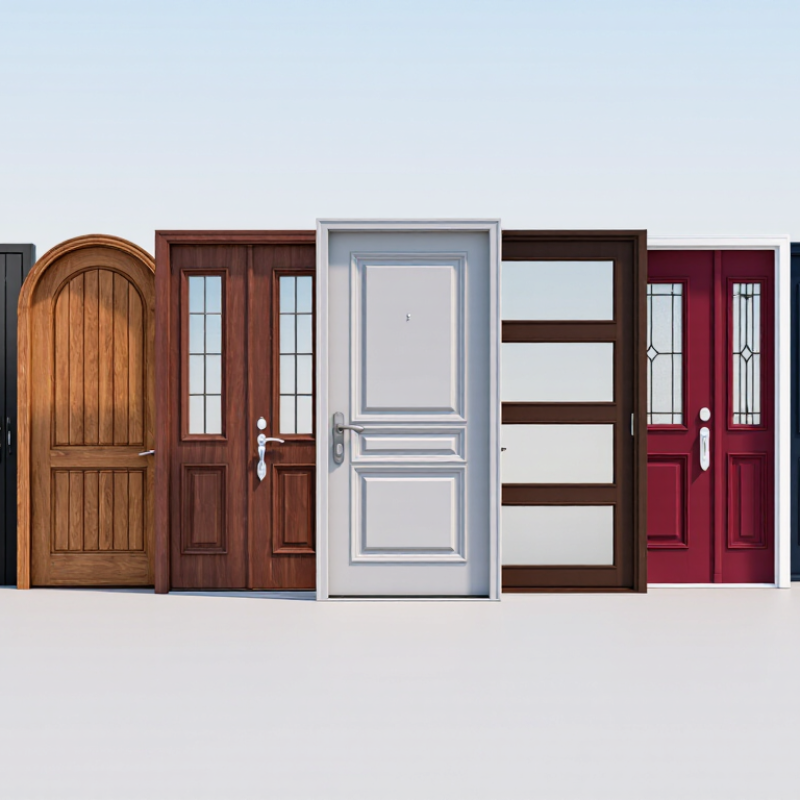
Fiberglass front doors come in more than one look. Smooth-skin and woodgrain designs suit clean or traditional façades. Flush, raised-panel, and Shaker styles offer different levels of visual detail. Craftsman doors often pair a simple frame with decorative glass. Full-lite and half-lite options bring daylight into an entry, while single doors with sidelights and double-door sets create wider, brighter entrances. Ten common choices. The best fit depends on the home’s proportions and daily use.
Materials and glass affect comfort as well as appearance. The U.S. Department of Energy’s Energy Saver guidance reports that windows account for about 25–30% of residential heating and cooling energy use. That figure concerns windows, not doors, but it is relevant when comparing glazed entry designs. Look for well-sealed edges, insulated cores, and glazing suited to the climate. A beautiful glass panel can still feel cold if the frame or installation is poorly sealed. Details matter.
Tips: Before ordering, measure the rough opening and check the swing direction. View woodgrain and glass samples in daylight. Not every entrance needs glass. I would also inspect the sill and weatherstripping; these small parts are easy to overlook, yet often deserve a second look.
Fiberglass front doors are not one uniform product. Common choices include smooth-skin, woodgrain, insulated-core, flush, craftsman-panel, full-lite, half-lite, decorative-glass, double, and impact-rated designs. These categories can overlap: a woodgrain door may also have an insulated core and glass inserts. Compare the full door assembly, not just its surface. A foam-filled core can reduce heat transfer, while tight weatherstripping and careful installation help limit drafts. Check published thermal ratings where available. A beautiful door with a poor seal can still feel cold beside the hinges.
Durability depends on more than fiberglass. Look for a stable frame, sound edge construction, and finishes suited to strong sun or frequent rain. Glass adds daylight, but larger glazed areas may affect heat gain and privacy; low-emissivity glazing can help. Security comes from the complete setup: reinforced lock areas, sturdy hinges, a well-fitted frame, and suitable glass. Small details matter. Maintenance is usually modest, though seals, hardware, and finish still need periodic checks. Wipe grit from the threshold before it wears the sweep. One comparison can be misleading: advertised door performance may not represent the installed unit, and real-world installation quality is easy to overlook.
Top 10 Types of Fiberglass Front Doors for Global Buyers
Climate, building codes, and installation conditions should guide a fiberglass door choice more than appearance alone. In humid coastal areas, check the full assembly: slab, frame, weatherstripping, sill, and finish. A well-sealed door can still leak at a poorly fitted threshold. In colder regions, compare the NFRC label’s U-factor, which measures heat transfer; lower values generally indicate better insulation. The U.S. Department of Energy notes that heating and cooling account for about 52% of household energy use, making the building envelope worth careful attention. That figure is not a door-specific estimate, though. Codes and rating requirements vary by location, so confirm the applicable energy and wind-load provisions before ordering.
Installation matters just as much. A prehung unit may simplify fitting, but rough-opening dimensions, wall depth, handing, and local trim details still need checking. For exposed sites, ask for documented impact or wind-pressure ratings that match the project’s requirements. Fiberglass slabs can resist moisture-related swelling better than many wood slabs, yet hardware, seals, and finishes still need maintenance. No material fixes a bad install.
Tips: Measure the opening in several places, and record the smallest width and height. Ask the supplier for the NFRC label and test documentation before purchase. Allow for a qualified local installer to verify the sill and flashing details. A checklist helps; it does not replace a site inspection.
The 0–4 scale is an ordinal comparison of typical glass area, not a measurement of energy performance: 0 means no glass and 4 means extensive glazing. More glass can increase daylight and visibility, while privacy and thermal performance depend on the glazing specification and the tested door assembly. Check local building-code requirements and product documentation for the project’s climate and installation conditions.
INFORMATION CENTER
RESOURCES & MORE
INSPIRATION FOR YOU
© Copyright 1981 - 2025 | California Patio™ All Rights Reserved

