Why Are Smart Speakers in High Demand Worldwide?
A Smart Speaker can answer a question while dinner simmers, set a timer, or play music without a phone in hand. That small convenience helps explain its appeal. Yet worldwide demand is not driven by convenience alone. Buyers also weigh price, language support, smart-home compatibility, and whether voice control works reliably in a busy room.
NPR and Edison Research’s 2023 Smart Audio Report found that 35% of U.S. adults owned a smart speaker. This is a useful adoption signal, but it is not a global estimate. Markets differ in income, broadband access, and preferred languages. Canalys, meanwhile, reported that worldwide smart-speaker shipments declined in 2022. That reminder matters: interest in voice technology does not guarantee steady sales every year. Market forecasts should be read with care, because estimates vary by product definition and research method.
Amazon Devices executive David Limp described voice as “the most natural user interface.” The idea is intuitive: speaking can feel quicker than opening an app and tapping through menus. Still, natural does not always mean effortless. A missed command, an unfamiliar accent, or a misunderstood name can turn a helpful device into a frustrating one. Privacy expectations matter, too. The strongest demand is likely to come where clear everyday benefits outweigh these concerns. Smart speakers are useful, but not for everyone. This article explores the practical reasons behind their popularity, the technology and services supporting adoption, and the limits that may shape future growth.
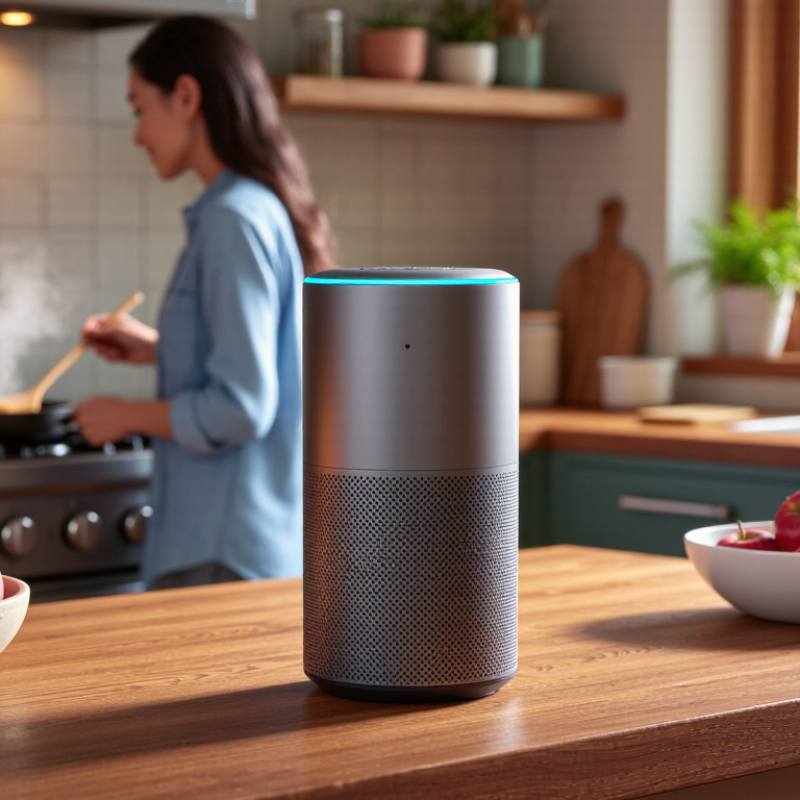
What Smart Speakers Are and How They Work
A smart speaker is a connected audio device that responds to spoken requests. It combines microphones, a speaker, internet access, and voice-assistant software. Edison Research’s 2024 Infinite Dial found that 35% of Americans aged 12 and older owned one, up from 34% in 2023. This is U.S. survey data, not a worldwide ownership estimate, but it shows how familiar the format has become.
Here is what happens when someone asks for the weather. Microphones capture the voice, and wake-word software signals that a request is starting. On many devices, the wake word is detected locally; the following audio may be sent to remote servers. Speech-recognition software turns it into text, and language-processing systems identify the request. The speaker then retrieves information or connects to a compatible service, before reading the response aloud.
That is useful, but not flawless. A running tap, distant voice, or unfamiliar accent can affect recognition. Some requests also depend on a stable internet connection, since processing may happen in the cloud. The speaker may retain voice recordings or interaction history, depending on its settings. Checking those controls matters. A device that answers quickly can still misunderstand a simple command.
Why Are Smart Speakers in High Demand Worldwide?
Smart speakers combine a microphone, voice recognition, and a speaker so people can play audio, ask questions, set timers, and control compatible smart-home devices hands-free.
The Sound Frequencies Behind Voice Interaction
A smart speaker’s microphones capture spoken sound, which voice-processing software analyzes to recognize commands. Frequency ranges shown are approximate; the 300–3,400 Hz telephone speech band is a conventional reference. Hands-free convenience and easy access to audio and voice controls help make these devices useful in everyday life.
Reference: ITU-T G.712 for the conventional telephone speech band; typical adult speaking fundamental-frequency ranges are approximate and vary by speaker.
Core Features Driving Consumer Interest
A smart speaker earns its place through small, repeatable conveniences. A spoken request can start a timer while hands are busy kneading dough. It can play music across a room, read a weather update, or control compatible lights without reaching for a phone. The appeal is practical. Canalys estimated that global shipments of smart speakers and displays reached about 112 million units in 2023. That scale reflects more than novelty: consumers increasingly expect voice control to fit naturally into everyday routines.
Voice is also a faster way to interact for many simple tasks. PwC’s 2018 Consumer Intelligence Series found that 71% of surveyed consumers preferred using a voice assistant to search rather than typing. Smart speakers extend that convenience into shared spaces, where family members can ask questions or set reminders from across the kitchen. Setup and compatibility matter, too. A device that connects easily with existing home equipment feels useful; one that needs repeated troubleshooting does not.
The experience is not always seamless. Accents, background noise, and misunderstood requests can interrupt the flow, and privacy concerns deserve attention. Still, hands-free access, quick responses, and everyday audio keep consumer interest strong. Small tasks add up.
Everyday Uses Across Homes and Industries
At home, a smart speaker can set a kitchen timer, play a weather update, or add milk to a shopping list while someone cooks. Voice control is useful when hands are wet or busy. It can also help people with limited mobility manage lights, reminders, and calls without reaching for a phone. Small tasks add up. Still, speech recognition can stumble over accents, background noise, or a quietly spoken request. Not every room needs one.
In workplaces, voice-enabled speakers can provide hands-free access to schedules, room controls, or general information. Hotels may use them to answer common guest questions, while shops can use voice tools to help staff check routine details. In some care settings, they may support reminders or simple requests, but they should not replace trained staff or personal attention. The practical value depends on setup, privacy safeguards, and whether the device works reliably in that environment. That part is easy to overlook.
Tips: Place the speaker away from televisions and running taps. Check its microphone and data settings before use. Try simple commands first, and keep a manual switch or phone nearby when voice control fails.
Factors Behind Their Global Market Growth
Smart speakers are gaining demand worldwide because they combine several everyday tasks in one small device. A voice command can set a kitchen timer, play a weather update, or control a compatible light without reaching for a phone. That convenience matters in busy homes, especially when hands are wet or occupied. Growing access to broadband and connected home devices also makes these speakers more useful than a standalone music player.
Language support and improved speech recognition help the category reach more households, though performance can vary with accents, background noise, and internet quality. For families, shared timers and reminders can simplify routines. For older adults or people with limited mobility, voice control may offer a practical way to access basic functions. Still, growth is not proof that every household needs one. Privacy settings can be confusing, and a device that misunderstands a request can frustrate users. The picture is uneven.
Tips: Check microphone controls and review saved voice activity before setup. Place the speaker away from televisions and noisy appliances for clearer responses. Start with one useful task, such as timers, then decide whether additional features genuinely fit your routine.
Privacy, Accessibility, and Adoption Challenges
Smart speakers are convenient because they respond without a screen, but a microphone in the kitchen can feel different from one in a shop. People may wonder when it is listening, where recordings are stored, and who can review them. Clear controls matter. A physical mute button, visible status light, and simple recording-deletion settings make privacy easier to understand. They do not remove every concern. In a shared home, one person’s settings may affect everyone else, including children or guests. That deserves a conversation, not a default assumption.
Voice control can help someone with limited mobility, low vision, or full hands set a timer or check the weather. Short spoken commands can make ordinary tasks less tiring. But recognition is imperfect. Accents, background noise, speech differences, and unfamiliar names can lead to repeated errors. Frustrating. Accessibility also depends on setup: small instructions, unclear prompts, or a required phone app can create new barriers. Adoption varies for practical reasons, too. Some households lack reliable internet, prefer physical controls, or simply do not want another device in the room. The technology can be useful, but trust grows when people can choose what it hears and correct it when it gets things wrong.