

7 Best Smart Photo Booths for Businesses in 2026

A Smart Photo Booth can turn a busy event corner into a useful brand touchpoint. Guests step in, choose a filter, and leave with a polished image on their phones. For businesses, though, the camera is only part of the decision. Setup time, lighting, sharing options, and staff support can shape the experience just as much.

The right booth depends on how and where you plan to use it. A compact kiosk may suit a retail launch, while a larger setup can handle steady traffic at a company party. Some systems offer branded screens and digital galleries; others focus on simple operation and quick prints. Small details matter. A slow upload can leave guests waiting, and an elaborate feature may go unused if the interface feels confusing.

This guide looks at seven smart photo booths worth considering in 2026, with attention to practical business needs rather than flashy specifications alone. It can be tempting to name one clear winner, but there isn’t a best choice for every budget, venue, or audience. That deserves a second look. Compare the actual workflow, check what is included, and consider how the booth will perform after the first few guests arrive.
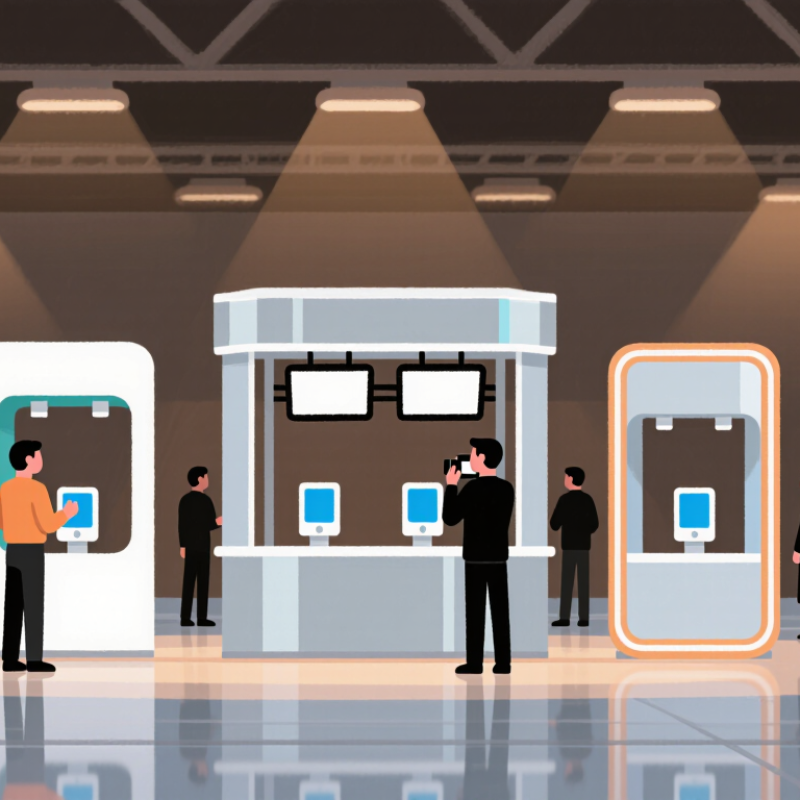
7 Best Smart Photo Booths for Businesses in 2026

Smart Photo Booths Explained: Cameras, AI Tools, Sharing, and Printing

A smart photo booth is more than a camera behind a screen. For business events, image quality depends on the lens, sensor, and lighting working together. Look for even illumination that handles both dark suits and bright dresses without washing out faces. A live preview helps guests adjust their position before the shutter clicks. Small details matter.

AI tools can soften backgrounds, remove visual clutter, or apply a consistent event theme. They should improve photos without making faces look artificial. Give guests a clear way to review and retake images. In practice, some effects look impressive on a display but less natural in print, so test them with real event lighting.

Sharing options should match the venue’s internet connection and guest expectations. QR codes can make downloads quick, while email delivery may suit follow-up campaigns. Printing adds a useful keepsake, but check print speed, paper capacity, and refill access before booking. Test it in person. A booth that is easy to operate, clean between sessions, and supported by clear instructions can matter more than a long list of features. One trade-off remains: adding more tools can make setup and guest choices less simple.

Market Outlook: Photo Booths Forecast to Grow at 9.7% CAGR, 2024–2030

A projected 9.7% compound annual growth rate for photo booths from 2024 to 2030 points to a market gaining momentum. For businesses, that growth reflects more than novelty: guests increasingly expect quick, shareable experiences at events, retail spaces, and hospitality venues. Still, a forecast is an estimate, not a promise of sales.

Smart booths can help meet that demand with touchscreens, adjustable lighting, digital delivery, and simple event branding. Picture a guest choosing a backdrop, posing under a soft ring light, then receiving a photo link within seconds. That flow can reduce printing needs and give operators useful engagement data. The details matter. Clear consent, careful data handling, and reliable Wi-Fi should be part of the setup, not afterthoughts.

Growth may also bring more competition and higher expectations. A polished screen cannot fix a cramped corner, slow uploads, or confusing instructions. Not every venue needs advanced features. Before investing, businesses can test a booth during a smaller event and track use, support time, and repeat bookings. The forecast is encouraging, but it leaves practical questions unanswered: local demand varies, and setup costs can eat into returns. A little friction remains. That is worth admitting.

How to Compare Seven Booths: Features, Workflow, Support, and Total Cost

Compare all seven booths with the same event scenario, not feature lists alone. Grand View Research valued the global photo booth market at $818.8 million in 2023. It projects an 11.2% compound annual growth rate through 2030. Allied Market Research estimated the market at $400.2 million in 2021 and forecasts about $1.1 billion by 2031. Their baselines differ, so treat these forecasts as context, not a buying guarantee. Test the queue. At a mock launch, time capture-to-share, inspect print sharpness, and try glare, weak Wi-Fi, and a full sharing queue. Record support for branded templates, instant digital delivery, prints, and useful usage analytics.

Then compare labor and resilience: Can one staff member reload paper, clear a jam, and restart the session? Ask support about response hours, replacement-part shipping, and offline operation. Small details matter. Build a 12-month cost sheet covering purchase or rental, setup, software, prints, props, shipping, staff time, maintenance, and upgrades. Check limits on shares, storage, and extra devices; low entry pricing can hide recurring fees. Score all seven against the same guest volume and event duration, then calculate cost per completed share or print. I would still flag one weakness: crowded-room tests rarely reveal month-three support quality. Request a service commitment and a customer reference before signing.

7 Best Smart Photo Booths for Businesses in 2026

Compare seven common booth configurations by capture features, operating workflow, support needs, and estimated first-year cost. The best fit depends on event volume, staffing, venue requirements, and the guest experience you want to provide.

How to Compare Seven Booths: Features, Workflow, Support, and Total Cost
Booth Configuration Best-Fit Use Typical Features Guest and Staff Workflow Setup and Space Support to Plan For Estimated Equipment Cost Estimated Annual Software Estimated First-Year Total
1. Tablet-based self-service kiosk Small events, retail activations, and simple branded photo sharing. Touchscreen capture, digital overlays, email or QR delivery, and optional compact printer. Guests follow on-screen prompts; staff usually handle check-in, paper replenishment, and occasional troubleshooting. Compact footprint; generally quick to transport and assemble. Requires a stable stand and power or charged batteries. Remote software help, device setup guidance, and a backup tablet or connectivity plan. US$500–2,000 US$600–2,400 US$1,100–4,400
2. DSLR or mirrorless open-air booth Weddings, corporate parties, and events where image quality and flexible framing matter. Interchangeable-lens camera, lighting, backdrop options, sharing tools, and optional on-site printing. A host can guide posing and keep the line moving; prints or digital files are delivered after each session. Needs room for a camera stand, lighting, backdrop, and guest area; setup and lighting checks take longer than a tablet kiosk. Camera and lighting troubleshooting, spare cables or batteries, and clear guidance for software updates. US$2,500–7,000 US$900–3,600 US$3,400–10,600
3. Enclosed traditional photo booth High-throughput events prioritizing privacy, classic photo strips, and a consistent guest experience. Enclosed capture area, fixed lighting and camera, touchscreen prompts, templates, and integrated print options. Guests enter, select options, pose, and collect a print or digital copy; an attendant monitors paper, queues, and booth operation. Requires more floor space, transport planning, and assembly than an open-air setup; venue access and door dimensions should be checked. On-site or rapid-response repair capability, print-supply planning, and pre-event equipment testing. US$5,000–15,000 US$1,200–4,800 US$6,200–19,800
4. 360-degree video booth Brand activations and social events seeking short, shareable video clips. Rotating camera arm, platform, lighting, slow-motion or effects workflows, and digital clip delivery. An attendant manages guest turns and safe positioning; clips are processed and shared after capture. Needs a clear operating zone, level flooring, power, and crowd control. Transport and assembly are more involved than for a tablet booth. Mechanical inspection, safe-operation procedures, spare parts, and dependable video-processing support. US$2,000–8,000 US$600–3,600 US$2,600–11,600
5. Roaming or handheld booth Networking events, conferences, and venues where guests are spread across multiple areas. Mobile camera or tablet capture, digital overlays, QR or message-based delivery, and optional roaming gallery collection. A staff member approaches guests and captures images on the move; delivery can happen at the event or afterward. Minimal fixed footprint. Requires charged devices, reliable wireless access where needed, and a plan for moving safely through the venue. Mobile-device support, battery backups, offline capture guidance, and a process for syncing files after connectivity returns. US$1,000–4,000 US$600–2,400 US$1,600–6,400
6. AI-enhanced headshot station Professional conferences, recruiting events, and employee or customer portrait sessions. Guided portrait capture, background or lighting adjustments, online delivery, and optional AI-assisted image processing. Guests follow capture instructions; images may require a processing queue before delivery, depending on the software and selected effects. Usually a small portrait area with controlled lighting and a camera or tablet. Internet access may be needed for cloud processing. Privacy and consent guidance, secure image handling, processing support, and clarity on usage limits or per-image charges. US$1,500–6,000 US$1,800–12,000 US$3,300–18,000
7. Hybrid multi-mode booth Businesses running different event formats and wanting one adaptable capture setup. Interchangeable capture modes, reusable templates, digital sharing, optional camera and printer integration, and centralized event settings. Staff select the event workflow in advance; guests use a guided self-service flow or receive assistance from an attendant. Space and setup vary by configuration. More components can increase transport, testing, and pre-event checklist requirements. End-to-end onboarding, compatibility checks, documented backup workflows, and a single point of technical support. US$4,000–12,000 US$1,200–6,000 US$5,200–18,000

Cost note: These are indicative planning ranges in US dollars for generic configurations, not quotes for specific products. First-year totals add estimated equipment and one year of software; they exclude taxes, shipping, staffing, venue fees, travel, consumables, and optional usage-based charges. Actual costs vary with hardware, software plan, print volume, support level, and event frequency.

Seven Smart Photo Booths Compared by Business Type and Core Capabilities

A smart photo booth should fit the business, not just look impressive in a showroom. Grand View Research estimated the global photo booth market at USD 818.8 million in 2023, with a projected 9.7% annual growth rate through 2030. That points to rising demand, but a growing market does not guarantee a booth will suit every venue. Test lighting, queue flow, and print speed before buying.

Retail shops need compact, share-ready booths with branded templates; corporate events benefit from lead capture and permission-based data collection. Hotels and wedding venues may prioritize flattering light, instant prints, and guest books. Museums and attractions need durable touchscreens and themed overlays. Malls and pop-up shops often need fast setup and remote monitoring. Schools and community venues benefit from simple controls and accessible layouts. Rental operators need rugged hardware, quick resets, and flexible payment options.

Small details matter. A ring light can create glare on glasses, while a busy interface slows a queue. For each setup, check whether images upload reliably when venue Wi-Fi is crowded. That part is easy to overlook. I would compare the total cost of prints, software, support, and repairs—not just the booth price. A feature-rich system can still disappoint if staff cannot troubleshoot it quickly.

7 Best Smart Photo Booth Types for Businesses in 2026

A business-type comparison of three common capabilities: instant digital sharing, on-site printing, and lead capture.

Scores are indicative planning ratings from 1 (lower typical priority) to 5 (higher typical priority), based on common workflows for each business type. They describe use-case priorities—not measured product performance or a ranking of specific providers.

Business Metrics: Event Throughput, Revenue Potential, and Data Privacy

A smart photo booth should be judged by more than its camera and screen. Track completed sessions per hour, average queue time, setup delays, and technical interruptions. For a three-hour reception, a booth that serves 90 groups smoothly may outperform one with more features but frequent pauses. Count abandoned queues, too. They reveal friction that a session total can hide. Real events are messy.

Revenue depends on the event and the offer. Compare booking fees, print or digital add-ons, and sponsor-supported experiences against labor, transport, setup, and maintenance costs. Record which options guests actually choose, not just what they say they like afterward. A clear upgrade menu near the booth can help, but pressure can sour the experience. Test small changes and compare results across similar events; one busy night proves little.

Data privacy deserves equal attention. Collect only what the experience needs, explain photo delivery and any optional sharing in plain language, and set a defined deletion schedule. Limit staff access, use secure transfer methods, and check how service providers store or handle images. Avoid collecting contact details by default. Ask whether a feature improves the guest experience enough to justify the extra data. That trade-off can be uncomfortable, and worth revisiting.

Article Source:

Go to Top